
Artificial intelligence is transforming every industry, from healthcare to finance, and the good news is that you don’t need a formal degree to master it. To self-learn artificial intelligence, you need to build a strong foundation in mathematics and programming, progress through machine learning fundamentals, dive into deep learning and neural networks, work on hands-on projects, and stay current with the rapidly evolving field through continuous learning. This comprehensive guide will walk you through each step of your AI learning journey, providing you with the resources, strategies, and roadmap you need to become proficient in artificial intelligence on your own terms.
Understanding What You’re Getting Into
Before diving into the technical details, it’s important to understand what artificial intelligence actually encompasses and what you’ll need to commit to this learning journey.
What is Artificial Intelligence?
Artificial intelligence is a broad field of computer science focused on creating systems that can perform tasks that typically require human intelligence. This includes problem-solving, pattern recognition, learning from experience, understanding language, and making decisions. AI encompasses several subfields including machine learning, deep learning, natural language processing, computer vision, and robotics.
Time Commitment and Prerequisites
Learning AI is a marathon, not a sprint. Expect to invest 6-12 months of consistent study to gain foundational competency, and years to achieve expertise. You’ll need basic computer literacy and a willingness to learn mathematics. While a background in programming helps, it’s not strictly necessary if you’re willing to start from the beginning.
Building Your Mathematical Foundation
Mathematics is the language of AI, and you cannot escape it. However, don’t let this intimidate you—you can learn the necessary math concepts alongside your AI studies.
Essential Math Topics
Focus on these key mathematical areas:
- Linear Algebra: Vectors, matrices, eigenvalues, and matrix operations form the backbone of machine learning algorithms
- Calculus: Derivatives and gradients are essential for understanding how neural networks learn
- Probability and Statistics: Understanding distributions, Bayes’ theorem, and statistical inference is crucial
- Optimization: Learn about gradient descent and other optimization algorithms
Recommended Math Resources
Start with “Mathematics for Machine Learning” by Marc Peter Deisenroth, A. Aldo Faisal, and Cheng Soon Ong (available on Amazon). This book is specifically designed for AI learners and covers exactly what you need.
For free online courses, Khan Academy offers excellent foundational courses in linear algebra, calculus, and statistics. The YouTube channel 3Blue1Brown provides exceptional visual explanations of linear algebra and calculus concepts that are particularly relevant to machine learning.
Mastering Programming Fundamentals
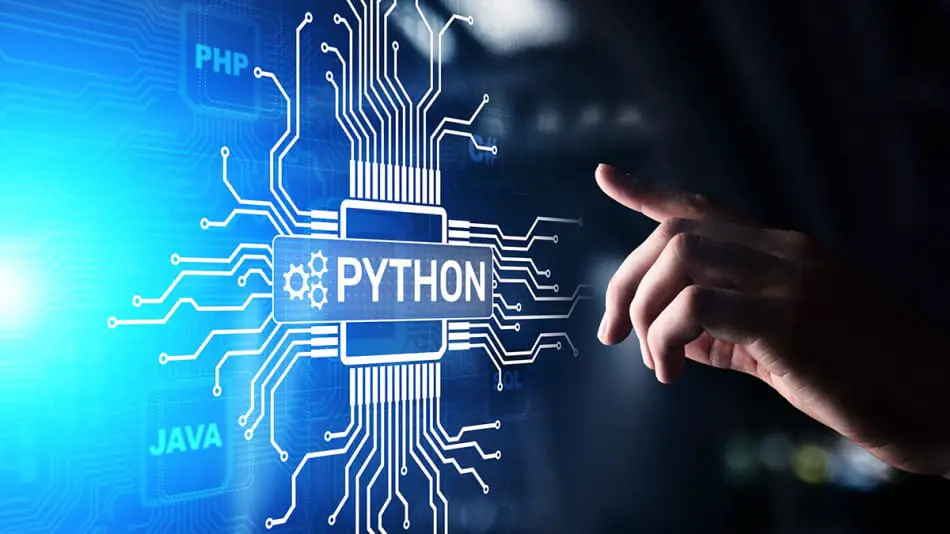
Python has become the de facto language for AI and machine learning, though other languages like R, Julia, and Java also have their place.
Why Python for AI?
Python dominates the AI landscape due to its simplicity, readability, and extensive ecosystem of libraries like NumPy, Pandas, Scikit-learn, TensorFlow, and PyTorch. The language allows you to focus on AI concepts rather than getting bogged down in syntax.
Programming Learning Path
Begin with Python basics: variables, data types, control structures, functions, and object-oriented programming. Then progress to data science libraries:
- NumPy: For numerical computing and array operations
- Pandas: For data manipulation and analysis
- Matplotlib and Seaborn: For data visualization
- Scikit-learn: For implementing machine learning algorithms
Programming Resources
The book “Python Crash Course” by Eric Matthes (Amazon link) is perfect for beginners. For AI-specific Python, try “Python for Data Analysis” by Wes McKinney (Amazon link).
Free courses include Python for Everybody on Coursera by Dr. Charles Severance, and the Corey Schafer Python tutorials on YouTube, which are exceptionally clear and comprehensive.
Learning Machine Learning Fundamentals
Machine learning is the subset of AI that focuses on systems that learn from data. This is where your AI journey truly begins.
Core Machine Learning Concepts
You need to understand both supervised and unsupervised learning. Supervised learning includes regression (predicting continuous values) and classification (predicting categories). Unsupervised learning includes clustering and dimensionality reduction. Also learn about model evaluation, cross-validation, overfitting, underfitting, and the bias-variance tradeoff.
Machine Learning Algorithms to Master
- Linear and Logistic Regression: The foundation of predictive modeling
- Decision Trees and Random Forests: Intuitive and powerful ensemble methods
- Support Vector Machines: Effective for classification tasks
- K-Means and Hierarchical Clustering: For unsupervised learning
- Principal Component Analysis: For dimensionality reduction
Best Machine Learning Resources
The gold standard textbook is “Hands-On Machine Learning with Scikit-Learn, Keras, and TensorFlow” by Aurélien Géron (Amazon link). This book is practical, comprehensive, and regularly updated.
For courses, Andrew Ng’s Machine Learning course on Coursera is legendary—millions have learned from it. Also check out fast.ai’s Practical Machine Learning course, which takes a top-down approach that many find more engaging. On YouTube, StatQuest with Josh Starmer breaks down complex ML concepts into digestible, entertaining videos.
Diving Into Deep Learning and Neural Networks
Deep learning, powered by neural networks, has driven most of the recent breakthroughs in AI, from image recognition to language models.
Neural Network Fundamentals
Start with understanding perceptrons, activation functions, forward propagation, and backpropagation. Then progress to architectures like convolutional neural networks (CNNs) for image processing, recurrent neural networks (RNNs) and LSTMs for sequential data, and transformers for natural language processing.
Deep Learning Frameworks
You’ll need to learn at least one deep learning framework. TensorFlow and Keras (which is now part of TensorFlow) offer high-level APIs that are beginner-friendly. PyTorch is preferred in research settings and offers more flexibility. Start with one and branch out later.
Deep Learning Resources
The “Deep Learning” book by Ian Goodfellow, Yoshua Bengio, and Aaron Courville (Amazon link) is the comprehensive reference, though it’s quite mathematical. For a more accessible introduction, try “Deep Learning with Python” by François Chollet (Amazon link).
The Deep Learning Specialization on Coursera by Andrew Ng is excellent. Fast.ai’s Practical Deep Learning for Coders takes you from beginner to building state-of-the-art models. DeepLearning.AI also offers specialized courses on TensorFlow and PyTorch on Coursera.
Working on Practical Projects
Theory without practice is useless. Building projects cements your knowledge and creates a portfolio for potential employers or clients.
Beginner Projects
- Iris Flower Classification: The “Hello World” of machine learning
- Housing Price Prediction: Practice regression techniques
- Sentiment Analysis: Classify text as positive or negative
- Handwritten Digit Recognition: Use the MNIST dataset to build a CNN
Intermediate to Advanced Projects
- Image Classification: Build a model to classify different objects in images
- Chatbot: Create a conversational AI using NLP techniques
- Recommendation System: Build a movie or product recommender
- Time Series Forecasting: Predict stock prices or weather patterns
- Generative AI: Create images, text, or music using GANs or transformers
Where to Find Project Ideas and Datasets
Kaggle is invaluable for both datasets and competitions. UCI Machine Learning Repository offers hundreds of datasets for practice. GitHub is full of project ideas and code examples. Google Dataset Search helps you find datasets for any topic you’re interested in.
Staying Current in a Fast-Moving Field
AI evolves rapidly. What’s cutting-edge today may be obsolete tomorrow. Continuous learning isn’t optional—it’s essential.
Essential AI Podcasts
- Lex Fridman Podcast: Deep conversations with leading AI researchers
- The TWIML AI Podcast: Interviews with AI practitioners and researchers
- Gradient Dissent: Exploring the latest in machine learning
- Data Skeptic: Makes complex AI concepts accessible
- Linear Digressions: Short, digestible explanations of AI topics
Blogs and Publications to Follow
Read papers on arXiv.org, particularly in the cs.AI and cs.LG categories. Follow the OpenAI blog, Google AI Blog, and DeepMind Blog for cutting-edge research. Towards Data Science on Medium publishes accessible articles daily. Subscribe to Import AI newsletter by Jack Clark for weekly AI updates.
Communities and Forums
Join the Machine Learning subreddit (r/MachineLearning) for discussions and paper reviews. Participate in Kaggle competitions and forums. The AI community on Discord and Slack offers real-time help and networking. Stack Overflow remains invaluable for troubleshooting coding issues.
Specializing in AI Subfields
Once you have a solid foundation, consider specializing in an area that interests you most.
Popular AI Specializations
- Computer Vision: Image and video analysis, object detection, facial recognition
- Natural Language Processing: Text analysis, language translation, chatbots
- Reinforcement Learning: Game AI, robotics, autonomous systems
- Generative AI: Creating new content with GANs, VAEs, and diffusion models
- AI Ethics and Safety: Ensuring AI systems are fair, transparent, and beneficial
Specialization Resources
For Computer Vision, take the CS231n course from Stanford (available free on YouTube). For NLP, the CS224n course from Stanford is excellent, and the Hugging Face course teaches practical transformer implementation. For Reinforcement Learning, the “Reinforcement Learning” book by Sutton and Barto (Amazon link) is the definitive text, and the DeepMind x UCL lecture series on YouTube is outstanding.
Developing Your Learning Strategy
How you learn is as important as what you learn. Develop effective self-learning habits that will serve you throughout your AI journey.
Create a Structured Learning Plan
Set specific, measurable goals with deadlines. Allocate daily study time—consistency beats intensity. Follow a logical progression: math and programming first, then machine learning, then deep learning, then specialization. Mix theory with practice constantly; never spend more than a few days on pure theory without implementing what you’ve learned.
Active Learning Techniques
Don’t just watch videos or read books passively. Take notes by hand to improve retention. Implement algorithms from scratch before using libraries—this builds deep understanding. Explain concepts to others or write blog posts about what you’re learning. Debug your code carefully rather than just copying working examples.
Overcoming Common Challenges
Imposter syndrome is universal—everyone feels overwhelmed sometimes. The field is vast; accept that you can’t learn everything. Math anxiety is common but surmountable; take it slowly and use visual resources. When stuck on a concept, try multiple explanations from different sources. Take breaks to avoid burnout, and celebrate small victories along the way.
Conclusion
Self-learning artificial intelligence is an ambitious but entirely achievable goal. By building a strong foundation in mathematics and programming, systematically working through machine learning and deep learning concepts, completing hands-on projects, and staying current with this rapidly evolving field, you can develop professional-level AI skills without formal education. The resources are available, many of them free—what’s required is your commitment, consistency, and curiosity. Start with the fundamentals, be patient with yourself, and remember that every expert was once a beginner. Your AI journey begins with a single line of code. Make today the day you write it.
Sources
- Deisenroth, M. P., Faisal, A. A., & Ong, C. S. (2020). Mathematics for Machine Learning. Cambridge University Press.
- Géron, A. (2022). Hands-On Machine Learning with Scikit-Learn, Keras, and TensorFlow (3rd ed.). O’Reilly Media.
- Goodfellow, I., Bengio, Y., & Courville, A. (2016). Deep Learning. MIT Press.
- Chollet, F. (2021). Deep Learning with Python (2nd ed.). Manning Publications.
- Sutton, R. S., & Barto, A. G. (2018). Reinforcement Learning: An Introduction (2nd ed.). MIT Press.
- Coursera Machine Learning Specialization by Andrew Ng (2023).
- Fast.ai Practical Deep Learning for Coders (2023).
- Stanford CS231n: Convolutional Neural Networks for Visual Recognition.
- Stanford CS224n: Natural Language Processing with Deep Learning.
- 3Blue1Brown YouTube Channel – Linear Algebra and Neural Networks Series.
- Kaggle Learn – Free Machine Learning and Data Science Courses.
“`