Learning chess on your own is not only possible but can be incredibly rewarding with the right approach and resources. To self-learn chess, you need to combine tactical puzzle training, study classic games and openings, practice regularly against opponents at your level, and analyze your games to identify weaknesses—a process that can take you from beginner to advanced player within 1-2 years of dedicated study.
What is Chess?
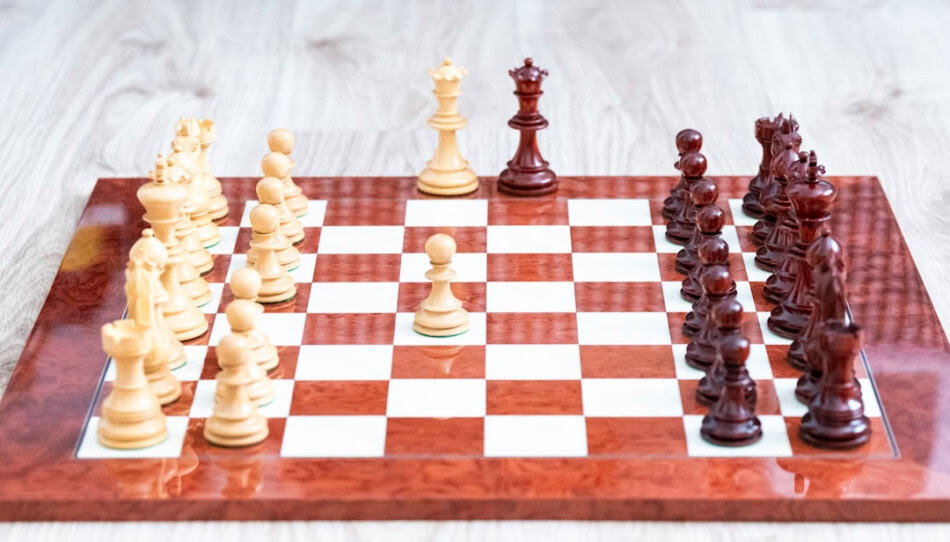
Chess is a strategic board game played between two players on an 8×8 checkered board with 64 squares. Each player begins with 16 pieces: one king, one queen, two rooks, two bishops, two knights, and eight pawns. The objective is to checkmate your opponent’s king, placing it under an inescapable threat of capture. Chess has evolved over 1,500 years and is considered one of the world’s most intellectually demanding games, combining elements of art, science, and sport. The game’s depth is nearly infinite—there are more possible chess positions than atoms in the observable universe—making it an endlessly fascinating subject for self-study.
How to Get Started Learning Chess
Beginning your chess journey requires the right combination of books, courses, and practice platforms. The good news is that chess is one of the most accessible subjects for autodidacts, with an abundance of free and paid resources available at every skill level.
Best Textbooks
Quality chess books remain essential tools for serious self-learners. Here are the top recommendations for beginners to intermediate players:
Bobby Fischer Teaches Chess by Bobby Fischer, Stuart Margulies, and Don Mosenfelder is the perfect starting point for absolute beginners. This programmed learning book uses a unique question-and-answer format that focuses heavily on checkmate patterns and tactical motifs. The book’s incremental approach ensures you master each concept before moving forward. Available on Amazon, this classic has introduced millions to chess fundamentals.
The Complete Chess Strategy by Ludek Pachman (or alternatively, Logical Chess: Move by Move by Irving Chernev) takes you to the next level by explaining the reasoning behind every move in instructive games. Chernev’s approach is particularly valuable for self-learners because it provides the internal monologue of strong play, teaching you how to think during a game rather than just memorize moves. Get it on Amazon to build your strategic foundation.
The Amateur’s Mind by Jeremy Silman addresses the specific thinking errors that keep intermediate players from advancing. Silman identifies common misconceptions and provides a clear framework for evaluating positions based on imbalances. This book is ideal once you’ve grasped the basics and are ready to develop a more sophisticated understanding. Find it on Amazon to break through plateaus in your development.
Free Online Courses
Several platforms offer structured chess courses that can guide your self-study:
Chess.com provides comprehensive free lessons covering everything from basic rules to advanced endgames. Their lessons section includes interactive exercises that immediately test your understanding. The platform’s adaptive learning system adjusts to your rating and progress, making it excellent for sustained improvement.
Lichess offers completely free, ad-free chess training at lichess.org/learn. Their learning section includes basic tutorials, practice scenarios, and extensive puzzle databases. Lichess also provides free computer analysis of your games, which is invaluable for self-learners trying to identify mistakes and improve.
Chessable uses science-based spaced repetition to help you memorize openings, tactics, and endgames at chessable.com. While they have premium content, many high-quality courses are available for free, including opening repertoires and tactical training.
YouTube Channels
YouTube has revolutionized chess education, providing free access to grandmaster-level instruction:
GothamChess (Levy Rozman) has become one of the most popular chess educators on YouTube, offering game recaps, opening tutorials, and improvement guides that are both entertaining and educational. His explanations are clear and suited for players ranging from beginners to advanced. Check out his channel at YouTube.com/c/GothamChess.
ChessVibes (Nelson Lopez) provides structured lessons on openings, middlegame strategies, and endgames with a calm, methodical teaching style perfect for self-learners. Visit YouTube.com/c/ChessVibes for content that builds systematically on previous lessons.
Daniel Naroditsky’s Speedrun series is particularly valuable because it shows how a grandmaster thinks while playing against progressively stronger opponents. Here’s an example of his instructional approach:
Podcasts
Chess podcasts allow you to absorb chess knowledge during commutes or downtime:
The Perpetual Chess Podcast hosted by Ben Johnson features interviews with chess players of all levels, discussing their improvement journeys, favorite training methods, and chess philosophy. The podcast is especially valuable for autodidacts because guests frequently share their self-study techniques. Listen at perpetualchesspod.com.
Chicken Chess (also by GothamChess) offers a more informal, entertaining take on chess news, recent games, and improvement advice. While less structured than traditional instruction, it keeps you engaged with the chess world and exposes you to high-level games and concepts. Find it on major podcast platforms or at GothamChess’s YouTube channel.
Chess Subtopics and Branches
Chess study can be divided into several essential areas, each requiring dedicated attention for well-rounded development.
Tactics and Calculation
Tactics are short-term combinations that win material or deliver checkmate. They form the foundation of practical chess strength, and improving your tactical vision will yield immediate rating gains. Common tactical motifs include pins, forks, skewers, discovered attacks, and deflections.
The best way to improve tactics is through puzzle practice. Both Chess.com and Lichess offer unlimited free puzzles that adapt to your skill level. Aim to solve at least 15-20 puzzles daily, focusing on accuracy over speed initially. The book Chess Tactics for Students by John Bain provides an excellent structured approach to learning tactical patterns systematically.
As you develop your tactical skills, remember that this is just one component of comprehensive chess mastery. For broader strategies on structuring your self-education across multiple domains, check out our guide on how to teach yourself anything.
Opening Principles and Theory
Chess openings are the initial moves of the game, and while memorization shouldn’t dominate your study time as a beginner, understanding opening principles is crucial. The fundamental principles include controlling the center, developing pieces quickly, safeguarding your king (usually through castling), and avoiding moving the same piece multiple times in the opening.
Rather than memorizing dozens of opening variations, beginners should focus on learning one or two openings for White and solid responses to 1.e4 and 1.d4 as Black. The London System for White and the Caro-Kann Defense against 1.e4 are excellent choices for self-learners because they lead to solid, understandable positions without requiring extensive memorization.
As you advance, Chessable’s spaced repetition courses can help you build a more sophisticated opening repertoire. The key is to understand the ideas behind your openings, not just memorize moves—this understanding allows you to navigate positions when opponents deviate from theory.
Middlegame Strategy
The middlegame is where chess becomes art. Strategic understanding involves recognizing positional factors like pawn structure, piece activity, king safety, and control of key squares. Unlike tactics, which can be calculated precisely, strategy requires judgment and pattern recognition developed through studying master games.
Jeremy Silman’s concept of imbalances provides an excellent framework for middlegame study. He identifies seven imbalances to evaluate in any position: material, minor piece superiority, pawn structure, space, control of key squares, development, and initiative. Learning to identify which imbalances favor you helps you formulate effective plans.
Study annotated master games to internalize strategic patterns. Books like The Most Instructive Games of Chess Ever Played by Irving Chernev or My 60 Memorable Games by Bobby Fischer provide deep insights into strategic thinking. Play through these games on a physical board when possible—the kinesthetic element aids retention.
Endgame Technique
The endgame is the final phase when few pieces remain on the board. Endgames are the most concrete phase of chess, where many positions have objectively correct moves. This makes them ideal for self-study—you can achieve near-perfect understanding through systematic practice.
Start with basic checkmates: king and queen versus king, king and rook versus king, and king and two bishops versus king. Then progress to fundamental pawn endgames, including king and pawn versus king, opposition, and the square rule. Silman’s Complete Endgame Course organizes endgame study by rating level, allowing you to focus on patterns relevant to your current strength.
Lichess offers excellent endgame practice tools where you can drill specific positions until they become automatic. The Lucena position, Philidor position, and basic rook endgames should be mastered by anyone serious about improvement. Many games are decided in the endgame, so this investment pays substantial dividends.
How to Study Chess on Your Own
Effective self-study in chess requires a structured approach that balances different types of practice. Here’s a practical framework for autodidacts:
Create a Structured Study Schedule: Dedicate specific time blocks to different aspects of chess. A balanced weekly schedule might include: 3 hours on tactics puzzles, 2 hours studying annotated games, 2 hours on opening study, 1 hour on endgame training, and at least 5-6 hours of actual play. Consistency matters more than volume—30 minutes daily beats a 3.5-hour weekend cram session.
Play Regularly at Appropriate Time Controls: Rapid games (10-15 minutes per side) provide the best balance for improvement. Bullet and blitz are too fast for learning, while classical games require time commitments that aren’t always practical. Play your games seriously, taking time to think through candidate moves. The goal is quality practice, not accumulating games mindlessly.
Analyze Every Game You Play: This is perhaps the most important habit for self-learners. After each game, review it with computer analysis, but don’t just look at the computer’s suggested moves. First, identify critical moments where you felt uncertain or made decisions you’re unsure about. Try to understand why your moves were good or bad, and what alternatives existed. This reflective practice accelerates pattern recognition far more than simply playing game after game.
Maintain a Chess Journal: Document patterns you notice, tactical motifs you missed, opening positions that confused you, and endgames you need to study. Reviewing this journal monthly helps you identify persistent weaknesses and track progress. Many strong players attribute significant improvement to keeping detailed training records.
Seek Out Stronger Opposition: While playing opponents at your level builds confidence, you learn more from losses to stronger players. Online platforms make this easy—you can always find someone 200-300 rating points above you willing to play. Study the games where you lost badly most carefully; they reveal your biggest blind spots.
Use Spaced Repetition for Openings: Rather than cramming opening theory, use tools like Chessable that employ spaced repetition algorithms. This ensures you review positions just before you’d forget them, moving knowledge into long-term memory efficiently. Spend 10-15 minutes daily on opening review rather than marathon sessions.
Balance Pattern Recognition with Calculation: Strong chess requires both recognizing familiar patterns instantly and calculating concrete variations accurately. Puzzle training develops both skills simultaneously. When solving puzzles, look for patterns first—does this position resemble something you’ve seen? Then calculate variations precisely to verify your intuition.
Play Against Chess Engines Strategically: Playing engines at full strength is pointless—you’ll simply lose without learning. Instead, use engines at reduced strength (slightly above your level) to practice specific openings or positions. Stockfish and other engines can be adjusted to play at any rating level, providing perfect training partners for deliberate practice.
Engage with the Chess Community: Join online forums like r/chess on Reddit, Chess.com’s forums, or local chess club Discord servers. Discussing positions, asking questions, and explaining concepts to others deepens your understanding. Teaching is one of the best ways to solidify your own knowledge—explaining why a move is strong forces you to articulate principles you might only grasp intuitively.
Set Specific, Measurable Goals: “Get better at chess” is too vague. Instead, set concrete objectives: “Reach 1500 rating on Chess.com by June,” “Master 20 key endgame positions this month,” or “Learn a complete repertoire against the French Defense.” Specific goals allow you to design focused study sessions and measure progress objectively. This systematic approach to self-improvement applies across all domains, as discussed in our article on teaching yourself anything.
Take Breaks and Avoid Burnout: Chess improvement isn’t linear—you’ll experience plateaus and even rating drops. During frustrating periods, step back from serious study and simply enjoy casual games or watch chess content without pressure. Your unconscious mind continues processing patterns during breaks, and you often return with fresh perspective.
Conclusion
Self-learning chess is a deeply rewarding intellectual journey that teaches far more than just how to move pieces on a board. The discipline, pattern recognition, and strategic thinking you develop transfer to countless other domains of life. With today’s abundance of free resources—from Lichess and Chess.com to YouTube instructors and puzzle databases—there’s never been a better time to be a chess autodidact.
The key to success is structured, deliberate practice across all phases of the game: tactics, openings, middlegame strategy, and endgames. Balance study with regular play, and always analyze your games to transform losses into learning opportunities. Remember that improvement takes time—most players need several months of consistent study to add 100 rating points, and progress slows at higher levels.
Start with the fundamentals, build good habits early, and gradually expand your knowledge as you advance. Whether your goal is to reach expert level or simply enjoy the game more deeply, the self-learning approach to chess offers a lifetime of fascination and growth. The 64 squares contain infinite complexity, and every game you play contributes to your understanding of this ancient and beautiful game.