Gazing up at the night sky has captivated humanity for millennia, and today’s aspiring astronomers have more resources than ever to explore the cosmos. But is astronomy hard to learn? Astronomy is moderately challenging to learn because it combines mathematics, physics, and specialized observational skills, but it’s absolutely accessible to self-learners who start with fundamental concepts and progress systematically. The difficulty largely depends on how deeply you want to dive—casual stargazing requires minimal background, while understanding cosmological theories demands more mathematical rigor.
The beauty of astronomy is that it accommodates learners at every level. You can begin by simply identifying constellations and gradually work your way toward understanding orbital mechanics, stellar evolution, and the structure of the universe itself.
Why Is Astronomy Hard to Learn?
Understanding what makes astronomy challenging helps you prepare for the learning journey ahead. Here are the main obstacles self-learners encounter:
- Mathematical prerequisites: Serious astronomy requires understanding algebra, trigonometry, and sometimes calculus, particularly when studying orbital mechanics, calculating distances, or analyzing light curves from variable stars.
- Physics foundation: Astronomy is essentially applied physics. Concepts like gravity, light, electromagnetic radiation, thermodynamics, and nuclear fusion are fundamental to understanding how celestial objects work.
- Abstract scales: The human brain struggles with astronomical scales—distances measured in light-years, temperatures in millions of degrees, and timeframes spanning billions of years make intuitive understanding difficult.
- Counterintuitive concepts: Ideas like spacetime curvature, the expansion of the universe, quantum mechanics in stellar processes, and relativity contradict everyday experience.
- Equipment learning curve: Practical astronomy involves learning to use telescopes, understanding different eyepieces, navigating the sky with star charts or apps, and adapting to observing conditions.
- Constantly evolving field: New discoveries regularly reshape our understanding, meaning staying current requires ongoing learning beyond foundational knowledge.
- Weather dependence: Unlike many subjects, practical astronomy requires clear skies, which can make hands-on learning sporadic and frustrating depending on your location and climate.
How Can I Get Better at Astronomy?
The path to astronomical literacy is more accessible than ever, thanks to free resources and structured learning approaches. Here’s how to make steady progress:
1. Start with Naked-Eye Astronomy
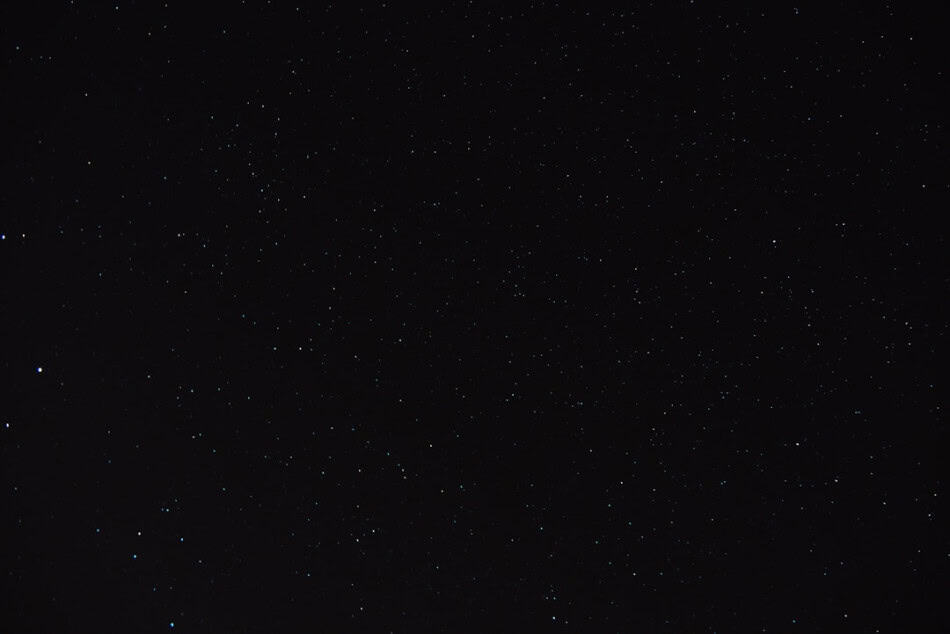
Before investing in equipment or diving into physics, develop familiarity with the night sky using only your eyes. Learn to identify major constellations, bright stars, and visible planets. This builds observational skills and creates a personal connection with the subject matter that sustains motivation through more challenging material.
Download Stellarium, a free open-source planetarium software that shows realistic skies and helps you identify what you’re seeing. Use it to plan observing sessions and learn the sky from your specific location.
2. Build Your Physics and Math Foundation
You don’t need advanced mathematics to enjoy astronomy, but understanding basic physics dramatically deepens your comprehension. Focus on mechanics, optics, and thermodynamics first. Work through problems actively rather than passively reading—this solidifies understanding.
Khan Academy’s Physics course provides excellent free instruction from basic mechanics through more advanced topics, with practice problems and video explanations tailored for self-learners.
3. Follow a Structured Astronomy Course
Self-teaching works best with structure. A well-designed course ensures you cover fundamental concepts before advancing to complex topics and helps you avoid knowledge gaps that create confusion later.
Consider Coursera’s astronomy courses, which include options from universities like Duke and the University of Edinburgh. These provide video lectures, readings, and quizzes to test your understanding, all available for free if you choose the audit option.
4. Engage with the Amateur Astronomy Community
Learning astronomy doesn’t have to be solitary. Joining astronomy clubs or online communities connects you with experienced observers who can answer questions, recommend equipment, and share observing tips. These communities often host star parties where you can try different telescopes before purchasing your own.
The Cloudy Nights forums host one of the largest amateur astronomy communities online, with sections dedicated to beginners, equipment reviews, and observation reports.
5. Practice Active Observation and Record-Keeping
Keeping an observing log transforms casual stargazing into deliberate practice. Note what you observe, sketch objects through your telescope or binoculars, and record atmospheric conditions. This develops your observational skills and creates a personal record of your astronomical journey.
Reviewing your notes over time reveals your progress and helps you notice details you previously missed. This metacognitive practice is essential for effective self-learning, as detailed in our guide on how to teach yourself anything.
6. Use Multiple Learning Modalities
Astronomy benefits from varied learning approaches. Combine reading textbooks with watching lectures, hands-on observing with simulation software, and solving problems with discussion in forums. Different modalities reinforce concepts from multiple angles, creating more robust understanding.
Supplement formal courses with astronomy podcasts during commutes, YouTube channels for visual explanations, and planetarium visits for immersive experiences that make abstract concepts tangible.
Understanding the Scale of the Universe
This excellent video from National Geographic helps visualize the mind-bending scales involved in astronomy, from Earth to the observable universe. Understanding scale is crucial for making sense of astronomical concepts and putting cosmic phenomena into perspective.
Frequently Asked Questions
Do I need a telescope to learn astronomy?
No, you definitely don’t need a telescope to begin learning astronomy. Many astronomers recommend starting with binoculars or even just naked-eye observation while building your knowledge base. A telescope becomes valuable once you understand the sky well enough to know what you want to observe. Purchasing expensive equipment too early often leads to frustration when beginners don’t yet know how to use it effectively or what to look for. Start with learning the constellations, understanding celestial mechanics, and studying astronomy through courses—then add equipment as your interests develop.
How long does it take to become proficient in astronomy?
This depends entirely on your definition of “proficient” and how much time you dedicate to learning. You can learn to identify major constellations and understand basic celestial mechanics within a few months of regular study. Developing the knowledge base of a serious amateur astronomer—understanding astrophysics, skilled telescope operation, and specialized knowledge in areas like planetary observation or deep-sky objects—typically takes several years of consistent learning and practice. The key is that astronomy offers rewarding milestones at every stage, so you’ll enjoy the journey regardless of how far you ultimately take it.
What’s the difference between astronomy and astrophysics?
Astronomy is the broader study of celestial objects and phenomena, encompassing observation, classification, and understanding of everything beyond Earth’s atmosphere. Astrophysics is a branch of astronomy that specifically applies the laws of physics to understand how celestial objects work—explaining their composition, behavior, evolution, and underlying physical processes. For self-learners, this distinction matters less than for professionals. You’ll naturally study both as you progress: observational astronomy teaches you what’s out there, while astrophysics explains why things behave as they do. Most modern astronomy incorporates significant astrophysics, so the terms often overlap in practice.
Summary
Astronomy presents moderate challenges for self-learners, primarily due to its mathematical and physics requirements, abstract concepts, and the specialized skills needed for observation. However, these obstacles are far from insurmountable. By starting with naked-eye observation, building a solid physics foundation, following structured courses, engaging with communities, maintaining observing logs, and using varied learning resources, you can systematically develop astronomical knowledge and skills.
The field rewards learners at every level—from casual stargazers who simply want to identify constellations to serious amateurs who contribute meaningful observations to scientific databases. Begin with Crash Course Astronomy on YouTube for an engaging introduction, then progress to more detailed resources as your interests develop.
Remember that astronomy is unique among sciences in offering immediate, awe-inspiring experiences even to beginners. Your first view of Saturn’s rings through a telescope or recognition of the Andromeda Galaxy as a faint smudge in the night sky provides emotional rewards that sustain motivation through more challenging conceptual material. The universe is waiting—your journey to understand it begins with a single step outside on a clear night.