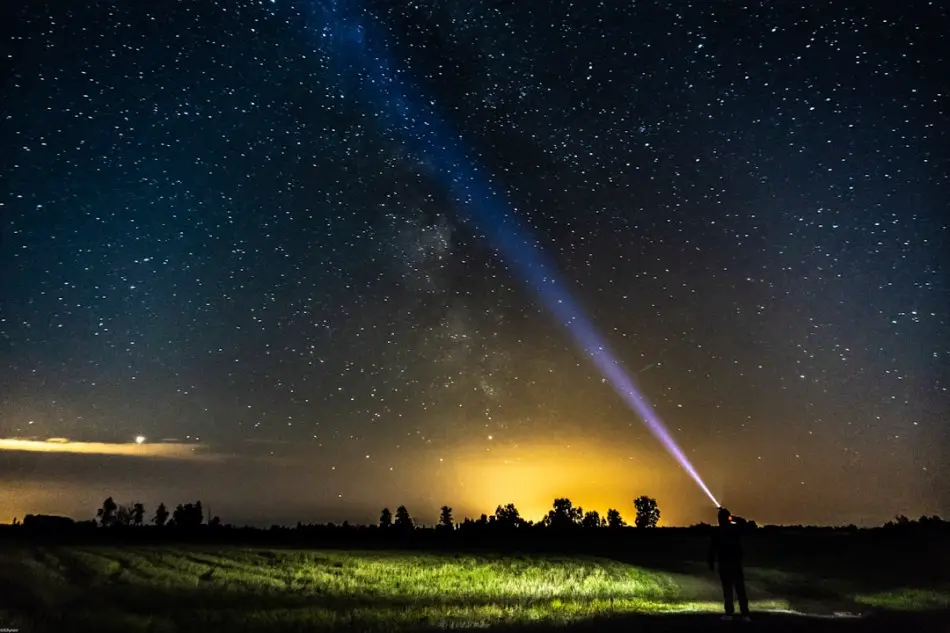
Astronomy, the study of celestial objects and the universe beyond Earth’s atmosphere, is one of the most accessible sciences for self-learners. You can effectively self-learn astronomy by starting with foundational physics and math, using free online courses and textbooks, observing the night sky with basic equipment, and progressively advancing through specialized subtopics like astrophysics, cosmology, and observational techniques. This guide will walk you through everything you need to embark on your astronomical education independently.
What is Astronomy?
Astronomy is the scientific study of celestial objects such as stars, planets, comets, galaxies, and phenomena that originate outside Earth’s atmosphere. It encompasses both observational practices—using telescopes and other instruments to gather data—and theoretical frameworks that explain the physical properties and behaviors of cosmic objects. Astronomy intersects with physics, chemistry, mathematics, and even biology when considering astrobiology. Unlike many sciences that require expensive laboratory equipment, astronomy can be practiced by anyone with clear skies, making it particularly suited for autodidacts.
How to Get Started Learning Astronomy
Beginning your journey in astronomy requires building a strong foundation in both theoretical knowledge and practical observation skills. The following resources will help you establish this foundation systematically.
Best Textbooks
Quality textbooks provide structured, comprehensive introductions to astronomy that self-learners can work through at their own pace.
The Cosmic Perspective by Jeffrey Bennett – This is widely considered the gold standard introductory astronomy textbook. It covers everything from basic astronomical concepts to modern cosmology, with excellent visualizations and explanations accessible to beginners. The book balances observational astronomy with the physics underlying celestial phenomena. Available on Amazon.
An Introduction to Modern Astrophysics by Bradley Carroll and Dale Ostlie – Known colloquially as “the Big Orange Book,” this comprehensive text is perfect for self-learners who want to dive deeper into the mathematical and physical aspects of astronomy. It requires calculus and physics knowledge but provides thorough coverage of stellar structure, galactic dynamics, and cosmology. Available on Amazon.
NightWatch: A Practical Guide to Viewing the Universe by Terence Dickinson – For the practical, observational side of astronomy, this guide is unmatched. It teaches you how to navigate the night sky, identify constellations, and use telescopes effectively. Available on Amazon.
Free Online Courses
High-quality astronomy courses from prestigious institutions are available free online, making professional-level education accessible to everyone.
Astronomy: Exploring Time and Space (University of Arizona via Coursera) – This course covers the history of astronomy, the solar system, stars, galaxies, and cosmology. It’s designed for beginners with no prior astronomy knowledge. Access the course here.
Introduction to Astronomy (MIT OpenCourseWare) – MIT’s introductory astronomy course offers complete lecture notes, problem sets, and exams. This rigorous course provides a more mathematical approach suitable for self-learners comfortable with physics. Access the course materials.
Greatest Unsolved Mysteries of the Universe (Australian National University via edX) – This engaging course explores dark matter, black holes, and the fate of the universe. It’s excellent for intermediate learners who want to understand current research frontiers. Available on edX.
YouTube Channels
Video content can make complex astronomical concepts more intuitive through visualization and animation.
Crash Course Astronomy – Hosted by Phil Plait, this series covers fundamental astronomy topics in engaging 10-15 minute episodes. The channel breaks down everything from planetary science to cosmology with humor and clarity. Watch the playlist.
PBS Space Time – For more advanced learners interested in astrophysics and cosmology, this channel explores cutting-edge topics like quantum mechanics, relativity, and theoretical physics as they relate to astronomy. Visit the channel.
Dr. Becky – An astrophysicist who explains recent astronomical discoveries, black holes, and space news in an accessible way. Her content bridges the gap between popular science and technical astronomy. Visit the channel.
Podcasts
Astronomy podcasts let you learn during commutes or while doing other activities, making efficient use of your time.
StarTalk Radio – Hosted by astrophysicist Neil deGrasse Tyson, this podcast combines astronomy with popular culture, featuring interviews with scientists, celebrities, and comedians. It makes complex topics entertaining and accessible. Listen here.
The Astronomy Cast – Hosted by astronomer Dr. Pamela Gay and science journalist Fraser Cain, this long-running podcast systematically covers astronomy topics from basic concepts to advanced research. With over 600 episodes, it’s an encyclopedic resource. Access the podcast.
Astronomy Subtopics and Branches
Astronomy encompasses numerous specializations. As you progress in your self-study, you’ll likely gravitate toward particular areas of interest. Understanding these branches helps you structure your learning path effectively, as discussed in our guide on how to teach yourself anything.
Observational Astronomy and Practical Stargazing
Observational astronomy involves actually looking at the night sky, whether with naked eyes, binoculars, or telescopes. This hands-on branch is essential for developing intuition about celestial mechanics and object identification.
Start by learning to identify major constellations, planets, and the motion of celestial objects across seasons. Apps like Stellarium (available free for desktop and mobile) help you learn what’s visible in your location at any given time. Join local astronomy clubs or attend star parties to learn from experienced amateur astronomers. Many communities have public observatories that offer viewing nights.
For equipment, begin with binoculars before investing in a telescope. A good pair of 7×50 or 10×50 binoculars can show you lunar craters, Jupiter’s moons, and numerous deep-sky objects. When ready for a telescope, consider starting with a Dobsonian reflector, which offers excellent value and simple operation.
Resources for observational astronomy include the website Sky & Telescope, which provides observation guides, and software like Stellarium for planning observation sessions. The practical skills you develop through observation will deepen your understanding of theoretical concepts.
Astrophysics and Stellar Evolution
Astrophysics applies physics principles to understand how stars, galaxies, and other celestial objects work. This branch requires solid foundations in physics, particularly mechanics, thermodynamics, electromagnetism, and quantum mechanics.
Stellar evolution examines how stars form from molecular clouds, undergo nuclear fusion, and eventually die as white dwarfs, neutron stars, or black holes depending on their mass. Understanding stellar evolution requires knowledge of nuclear physics, thermodynamics, and fluid dynamics.
To study astrophysics independently, you’ll need calculus-based physics as a prerequisite. Work through introductory physics textbooks before tackling specialized astrophysics texts. Carroll and Ostlie’s textbook mentioned earlier is excellent for this purpose. Supplement your reading with problem-solving—astrophysics is learned by doing calculations, not just reading.
The systematic approach to mastering complex subjects like astrophysics mirrors general self-learning principles outlined in our comprehensive autodidact guide, emphasizing progressive complexity and active practice.
Cosmology and the Large-Scale Universe
Cosmology studies the universe’s origin, evolution, and ultimate fate. This field combines astronomy, physics, and philosophy, addressing profound questions about dark matter, dark energy, the Big Bang, and whether our universe is just one among many.
Modern cosmology relies heavily on general relativity, particle physics, and observational data from telescopes and satellites. Topics include cosmic microwave background radiation, galaxy formation and clustering, universe expansion, and the possible geometries of spacetime.
For self-learners, start with popular science books by authors like Brian Greene or Lawrence Krauss to grasp the big picture, then progress to textbooks like “Introduction to Cosmology” by Barbara Ryden. Online courses specifically on cosmology, such as those available on Coursera, provide structured learning paths.
Cosmology is rapidly evolving, with new discoveries regularly reshaping our understanding. Follow current research through preprint servers like arXiv.org and science news outlets that cover astronomical discoveries.
Planetary Science and Astrobiology
Planetary science examines planets, moons, asteroids, comets, and planetary systems both within our solar system and beyond. Astrobiology extends this to investigate the possibility of life elsewhere in the universe.
This interdisciplinary field draws from geology, atmospheric science, chemistry, and biology alongside astronomy. Topics include planetary atmospheres, surface geology, magnetospheres, and the conditions necessary for life.
The discovery of thousands of exoplanets has made planetary science particularly exciting. Self-learners can explore how astronomers detect planets around distant stars using methods like transit photometry and radial velocity measurements.
NASA and ESA provide extensive free educational resources about planetary science, including mission data, images, and educational materials. The NASA Exoplanet Archive offers data on all confirmed exoplanets, allowing you to explore real discoveries.
How to Study Astronomy on Your Own
Build a Strong Mathematical Foundation – Astronomy, especially at advanced levels, requires mathematics. At minimum, you need algebra and trigonometry for basic astronomy. For astrophysics, you’ll need calculus, differential equations, and linear algebra. Don’t skip the math—it’s the language in which the universe expresses itself. Work through math systematically before or alongside astronomy topics that require it.
Master Physics Fundamentals – Classical mechanics, electromagnetism, thermodynamics, and quantum mechanics underpin astronomical phenomena. A solid physics foundation makes astronomical concepts much more comprehensible. Consider working through introductory physics courses before diving deep into astrophysics.
Balance Theory with Observation – Don’t just read about astronomy—observe the sky regularly. Practical observation grounds theoretical knowledge in reality and develops intuition about celestial motions, scales, and phenomena. Keep an observation log noting what you see, weather conditions, and equipment used.
Work Through Problems – Astronomy textbooks contain problem sets for good reason. Actually calculating orbital periods, stellar luminosities, or cosmological distances cements understanding far better than passive reading. Struggle with problems before looking at solutions, as the struggle itself builds neural pathways.
Create a Study Schedule – Consistency matters more than intensity in self-learning. Study astronomy for 30-60 minutes daily rather than cramming occasionally. Use spaced repetition for memorizing constellations, formulas, and terminology. Schedule both reading time and observation sessions.
Join Communities – Connect with other astronomy enthusiasts through online forums like Reddit’s r/astronomy, astronomy club meetings, or social media groups. Discussing concepts with others exposes you to different perspectives and helps identify gaps in your understanding. Teaching others what you’ve learned is one of the most effective study techniques.
Use Multiple Resources – Different authors explain concepts differently. If you’re stuck on a topic in one textbook, consult another book, watch a video, or read a different explanation. The redundancy reinforces learning, and alternative explanations often provide the insight that makes everything click.
Follow Current Astronomy News – Astronomy is an active science with frequent discoveries. Following current research through NASA announcements, ESA missions, and publications like Sky & Telescope keeps your knowledge current and maintains motivation. Understanding how new discoveries fit into established frameworks deepens comprehension.
Set Concrete Learning Goals – Define what you want to achieve. Goals might include identifying all Messier objects, understanding stellar nucleosynthesis, calculating orbital mechanics, or building your own telescope. Specific goals provide direction and milestones to measure progress, key principles of effective self-directed learning as explored in our autodidact methodology guide.
Practice Active Recall – After studying a topic, close the book and write out everything you remember. This retrieval practice strengthens memory far more than rereading. Create flashcards for terminology, constellation identification, and key formulas. Test yourself regularly on previously learned material to combat forgetting.
Document Your Learning Journey – Keep a learning journal documenting concepts mastered, questions that arise, observation notes, and insights. This record serves multiple purposes: tracking progress, identifying patterns in your learning, creating a reference for future review, and building a portfolio of your astronomical knowledge.
Conclusion
Self-learning astronomy is an immensely rewarding journey that connects you with humanity’s oldest science while engaging with cutting-edge discoveries at the frontier of human knowledge. The combination of accessible entry points—anyone can stargaze—and profound depth makes astronomy ideal for autodidacts. By systematically building your knowledge through textbooks, courses, and practical observation, while maintaining consistent study habits and engaging with the astronomy community, you can achieve deep understanding without formal instruction. The universe is vast, ancient, and full of mysteries waiting to be understood. Your astronomical education is limited only by your curiosity and dedication. Start tonight by looking up at the sky, identifying one new constellation, and reading one chapter of an astronomy book. Small consistent steps lead to comprehensive mastery, and the cosmos rewards those patient enough to study it carefully.
Sources
- Astronomy – Wikipedia
- Astronomy: Exploring Time and Space – Coursera
- Introduction to Astronomy – MIT OpenCourseWare
- Greatest Unsolved Mysteries of the Universe – edX
- Crash Course Astronomy – YouTube
- PBS Space Time – YouTube
- Dr. Becky – YouTube
- StarTalk Radio
- Astronomy Cast
- Sky & Telescope
- How to Teach Yourself Anything – Autodidact Society
“`